
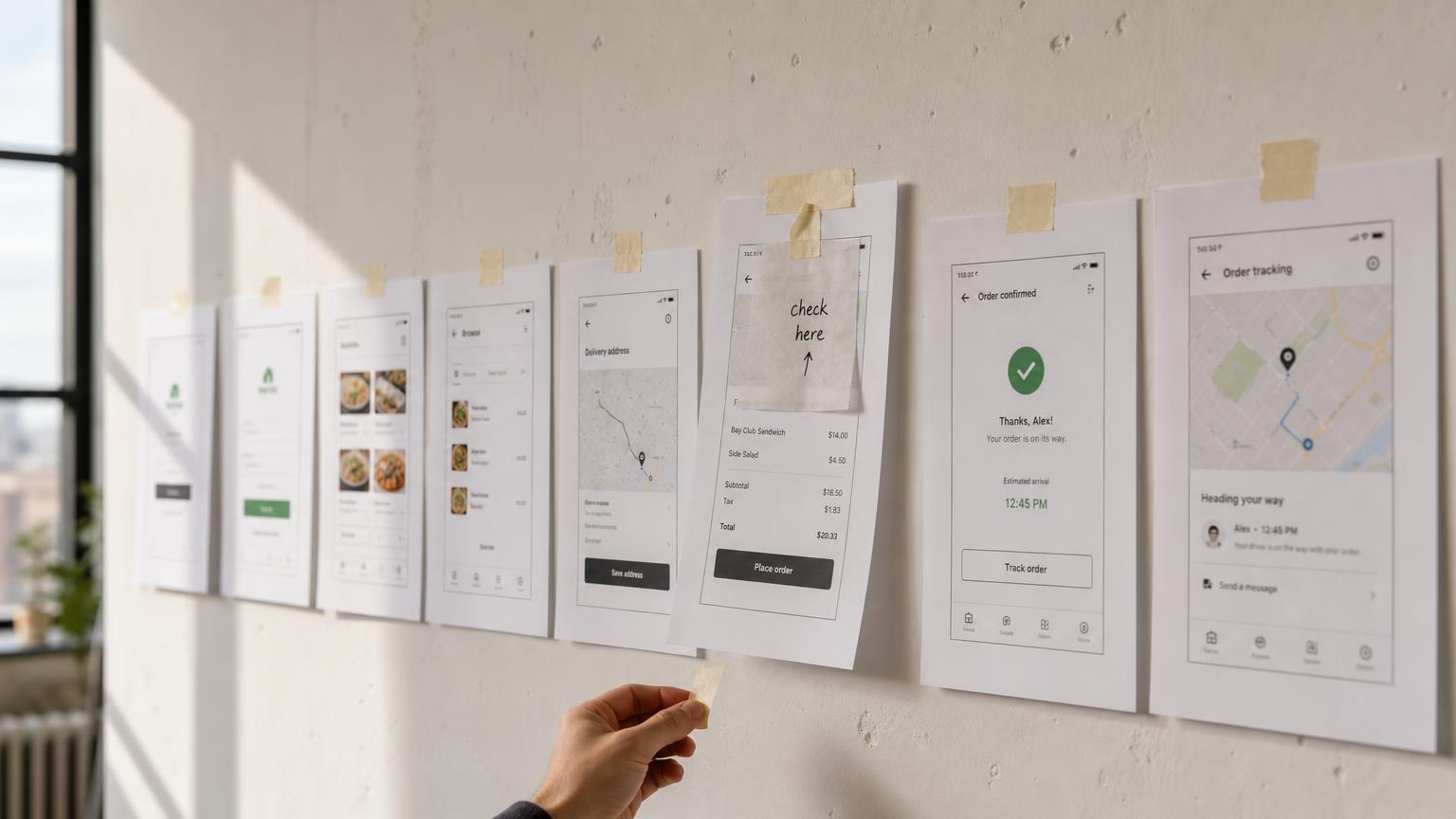
The most expensive response to low conversion is turning it into a build brief before anyone knows what failed. Users aren't paying, so onboarding becomes a project; when that doesn't move the number, the price gets reworked next. Each brief sounds reasonable while solving nothing the team has observed.
One person may have signed up to finish a job they'll never need again. Someone else may still be active weeks later, trying to buy and stuck behind a security review nobody on the product side knows is happening. An overall conversion rate puts both in the same group, although their reasons have almost nothing in common.
This is usually why teams diagnose the problem backwards: payment is missing, so the price or checkout gets the blame first. At Fortnight, we'd pause before writing that brief. Before scoping another feature or an onboarding redesign, we'd want to know where an intended customer stopped moving towards payment. The answer determines whether there is anything worth building at all.
The awkward thing about low conversion is that analytics records the ending, not the cause. A user who never reaches value can look much like one who received all the value they needed for free. In a company, somebody may want the product and still be unable to approve it. Checkout becomes the likely suspect only after the earlier parts hold up, so the useful job is finding where someone the product was made for first lost the reason or ability to continue.
Start with the people who signed up. Their signup proves the form worked, perhaps because an advert or search result made a convincing promise, but it is a long way from proof that the product has found a customer. Picture a fitness app attracting people who want a free plan for one charity run alongside people who train throughout the year. The first group may be very active for six weeks and disappear after the event. That isn't necessarily a retention failure: their need ended at the finish line. Building around that burst of activity would move the product away from users with an ongoing reason to pay.
The average conversion number hides this. A more useful comparison separates the intended customer from everyone else and looks at what happened after signup. If that smaller group returns more often or asks about limits the wider audience ignores, the next move is probably sharper positioning. More traffic would only make the average harder to read.
Once suitable people are showing up, the question changes: did the product give them anything? A completed profile is a comforting onboarding metric, but nobody joins a dating app for the pleasure of completing a profile. A relevant match becoming a real conversation is much closer to the value they came for. Whatever the product, activation should describe a result that makes returning or paying more likely. Signup is almost always too early.
Now imagine that the user receives plenty of matches, but none within a realistic distance. Improving the messaging screen will not help because the problem happened before the conversation could begin. If the matches are relevant and the message button is confusing, the interface may well be the problem. The drop-off looks similar; what needs fixing does not. Watching a handful of suitable users reach this point will tell you more than rebuilding the whole onboarding flow.
Reaching value once doesn't settle the business model. Picture a product that turns a folder of customer interviews into a clear report which the team uses in planning. If the next research round is nine months away, asking for a monthly subscription creates a problem no onboarding adjustment will fix. The product worked; the subscription did not fit the frequency of the job. Reminders can bring someone back to a screen, but they can't manufacture another research round.
The useful comparison here is between people who succeeded once and those who returned when the next job appeared. What prompted the second visit? If the value is real but occasional, a one-off charge or a service may fit better than a subscription. We wrote about ten ways an app can make money a while ago; it may help if recurring payment turns out to be the wrong fit.
When people return, the offer itself deserves attention. Plans tend to be built from whatever is easy to count rather than the work those limits change. An independent retailer may not care that a paid plan allows fifty more product exports. Keeping stock levels consistent between the website and the shop could be worth paying for because it prevents selling something that is no longer there. Here, the paid value is stock accuracy, not a larger allowance in a feature grid.
A solo shop owner may value accurate stock because it prevents an awkward customer email. A retail team with several locations may care more about keeping every shop in sync. Testing one change to the offer with one of those groups teaches more than lowering every price at once. Price becomes a plausible problem when the right users reach value, understand what the paid plan changes and still say the cost is too high.
Watching free users only takes you so far, because someone who has received the intended value eventually needs to see a real offer and decide. Charging is part of learning about the product, not a revenue task left until later. A free period still needs a view of who should pay and what will trigger that decision. Make the offer to people whose behaviour suggests a fit, then listen to the reason for a refusal. Someone waiting for a required integration has given a different answer from someone who only needs the product once a year.
For a consumer product, the person getting the value can usually decide to buy, whereas company purchases are messier. A daily user may need a manager's sign-off, and the purchase might still require a security review before anybody signs. This is the part a product dashboard rarely shows. Extra onboarding will not solve it, because self-serve adoption can produce the person who carries a product into the buying process without removing that process.
The quickest way to understand this is to follow one active account as far through the purchase as it got, speaking to the user and whoever would approve payment. A forwardable business case may be missing, or the company may need a security document. If the blocker is an invoice requirement, another feature is an expensive way to avoid sending the right file.
Checkout deserves attention once people have shown an intent to buy. Repeated visits to the pricing page without a checkout attempt still point towards the offer; failed payments and billing messages point further down the path. A preferred payment method may be unavailable, or an unexpected charge can change the decision at the final step. Fix the observed fault and check whether a similarly committed customer gets through next time. Change one variable at a time: alter checkout and the offer in the same release, and even a better result leaves everyone guessing why.
The order is less exciting than a conversion playbook, but it wastes less time. Start with who arrived and follow what happened after they met the product, stopping at the first assumption the evidence doesn't support. That is where the next test belongs.
Sometimes the answer is a narrower audience and no new development at all. That's still useful. Elsewhere, one awkward step prevents people from reaching the first result, or a monthly plan has been attached to an occasional job. A B2B purchase might be blocked outside the interface altogether. Once the break is visible, design and development have a real problem to solve instead of a guess to test.
If your product has users but the route to payment is still unclear, we can help you find the point worth fixing before you build anything else: https://www.fortnight.studio/contact
.png)


